Buy lasertag.info ?
We are moving the project
lasertag.info .
Are you interested in purchasing the domain
lasertag.info ?
domain@kv-gmbh.de · 0541-91531010
Buy lasertag.info ?
What is circular causality?
Circular causality refers to a situation where the cause and effect of a phenomenon are interconnected and influence each other in a continuous loop. In other words, instead of a linear cause-and-effect relationship, where one event leads to another in a straight line, circular causality involves a feedback loop where each event influences the other in a continuous cycle. This concept is often used in systems theory to describe complex interactions within a system, where multiple factors interact with each other in a non-linear and interconnected manner. **
Is causality time-dependent?
Causality is not inherently time-dependent. Causality refers to the relationship between cause and effect, and it can occur at any point in time. Events in the past can cause effects in the present, and events in the present can cause effects in the future. The concept of causality is not limited to a specific point in time, as it can occur across different time frames. Therefore, causality is not inherently time-dependent. **

Similar search terms for Causality
Top-Angebote
Products related to Causality:
-
DynamicDeals ActiveBounce Sensory Ball Outdoor Pull & Toss Game For Kids And Family Fun ActiveBounce Sensory Ball Outdoor Pull & Toss Game For Kids And Family FunTurn everyday playtime into an exciting energyburning adventure with the ActiveBounce outdoor toy. Designed for kids, teens, and even adults, this interactive pullandthrow game helps improve coordination, focus, and active movement while keeping...29,97 $*Shipping: 0,00 $Secure redirect to the provider
-
Repos Mythicals Tactical Card Game for Two Players - Tactical Market GameMythicals is a tactical card game for two players, set in a world of celestial creatures and elemental mastery. Players study creatures linked to water, air, earth, and fire while competing to demonstrate their understanding of the elements. How to play: on each turn, choose whether to draw cards and add the remaining cards to the market, or select cards directly from the market. Collect cards representing the same element, then discard eligible collections to claim favor tokens. Each token presents a different collection challenge, such as matching elements and values or creating a flush. Players must balance careful card selection with timely risk-taking as they build collections and pursue the most valuable favor tokens. When the game ends, the player with the greatest mastery of the elements wins. This game features a market-based card selection system and includes elements of water, air, earth, and fire. It's designed for two players and offers a fun and strategic gameplay experience.13,59 £*Shipping: 3,95 £Secure redirect to the provider
-
DynamicDeals Family Fun Outdoor Suction Catch Game Parent Child Interactive Toss And Catch Set Family Fun Outdoor Suction Catch Game Parent Child Interactive Toss And Catch SetTurn every sunny afternoon into a bonding adventure with this outdoor family game designed for parents and kids to laugh, play, and connect. This engaging suction cup catch game set brings simple joy back into active play, making it easy for...37,97 $*Shipping: 0,00 $Secure redirect to the provider




-
What is the causality of existence?
The causality of existence refers to the idea that everything that exists has a cause or reason for its existence. This concept suggests that nothing can come into being without a cause or explanation. It implies that there is a chain of events or actions that lead to the existence of everything in the universe. Understanding the causality of existence helps us make sense of the world around us and provides a framework for exploring the interconnectedness of all things. **
-
What is the principle of causality?
The principle of causality is the idea that every event is caused by a preceding event or set of events. It suggests that there is a cause and effect relationship between events, where one event leads to the occurrence of another. This principle is fundamental in understanding the natural world and forms the basis of scientific inquiry and reasoning. It implies that events do not happen randomly but are the result of specific causes. **
-
What is causality according to Kant?
According to Kant, causality is a fundamental concept that governs our understanding of the world. He argues that causality is not something that we directly observe in the world, but rather a necessary concept that our minds impose on our experience in order to make sense of it. Kant believes that we cannot know things as they are in themselves, but only as they appear to us through the framework of our mental categories, including causality. Therefore, causality is a necessary condition for our experience of the world, but it is not something that we can directly perceive. **
-
How can one prove that causality exists?
Causality can be proven through empirical evidence and logical reasoning. By observing the relationship between two events and consistently finding that one event leads to the other, we can establish a causal link. Additionally, conducting controlled experiments and statistical analyses can help demonstrate causality by showing that changes in one variable directly result in changes in another. Furthermore, the use of counterfactuals and the application of causal models can help establish causality by ruling out alternative explanations for the observed relationship between events. **

Is the belief in causality a religion?
No, the belief in causality is not a religion. Causality is a fundamental principle in science and philosophy that states that every event is caused by a preceding event. It is based on empirical evidence and logical reasoning, rather than faith or worship. While causality may be a concept that is discussed within religious contexts, it is not inherently a religious belief in and of itself. **
How can one be dependent despite rejecting causality?
One can be dependent despite rejecting causality by acknowledging that certain events or phenomena may be interconnected or interrelated without one directly causing the other. This perspective allows for the recognition of dependencies and relationships between different elements, without attributing a strict cause-and-effect relationship. By understanding that dependence does not necessarily imply direct causation, one can still appreciate the interconnectedness and interdependence of various factors while rejecting a strict linear model of causality. This approach allows for a more nuanced understanding of complex systems and relationships. **
Top-Angebote
Products related to Causality:
-
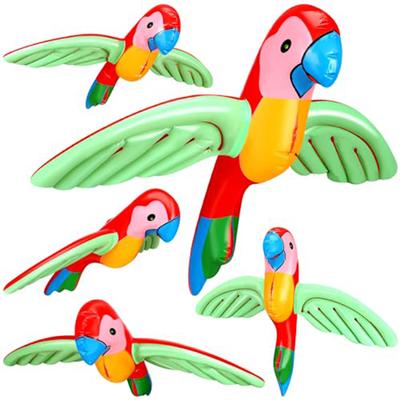
Modern Home Fixes Inflatable Parrot Toss Game Toy For Beach Parties Outdoor Fun Inflatable Parrot Toss Game Toy For Beach Parties Outdoor FunTurn any gathering into a lively experience with this inflatable 1pc parrot game designed to spark laughter and friendly competition. Perfect for families, kids, and party lovers, its a lightweight, portable toy that brings instant fun to any...34,97 $*Shipping: 0,00 $Secure redirect to the provider
-
The Handy Homestead Giant Inflatable Dice Party Game Toy For Indoor Outdoor Fun Giant Inflatable Dice Party Game Toy For Indoor Outdoor FunBring instant laughter, movement, and friendly competition to any gathering with 1pc inflatable dice made for big, playful moments. This lightweight blowup cube is a fun giant dice toy for kids, families, classrooms, parties, and outdoor activities....34,97 $*Shipping: 0,00 $Secure redirect to the provider
-
DynamicDeals ActiveBounce Sensory Ball Outdoor Pull & Toss Game For Kids And Family Fun ActiveBounce Sensory Ball Outdoor Pull & Toss Game For Kids And Family FunTurn everyday playtime into an exciting energyburning adventure with the ActiveBounce outdoor toy. Designed for kids, teens, and even adults, this interactive pullandthrow game helps improve coordination, focus, and active movement while keeping...29,97 $*Shipping: 0,00 $Secure redirect to the provider
-
Repos Mythicals Tactical Card Game for Two Players - Tactical Market GameMythicals is a tactical card game for two players, set in a world of celestial creatures and elemental mastery. Players study creatures linked to water, air, earth, and fire while competing to demonstrate their understanding of the elements. How to play: on each turn, choose whether to draw cards and add the remaining cards to the market, or select cards directly from the market. Collect cards representing the same element, then discard eligible collections to claim favor tokens. Each token presents a different collection challenge, such as matching elements and values or creating a flush. Players must balance careful card selection with timely risk-taking as they build collections and pursue the most valuable favor tokens. When the game ends, the player with the greatest mastery of the elements wins. This game features a market-based card selection system and includes elements of water, air, earth, and fire. It's designed for two players and offers a fun and strategic gameplay experience.13,59 £*Shipping: 3,95 £Secure redirect to the provider
-
What is circular causality?
Circular causality refers to a situation where the cause and effect of a phenomenon are interconnected and influence each other in a continuous loop. In other words, instead of a linear cause-and-effect relationship, where one event leads to another in a straight line, circular causality involves a feedback loop where each event influences the other in a continuous cycle. This concept is often used in systems theory to describe complex interactions within a system, where multiple factors interact with each other in a non-linear and interconnected manner. **
-
Is causality time-dependent?
Causality is not inherently time-dependent. Causality refers to the relationship between cause and effect, and it can occur at any point in time. Events in the past can cause effects in the present, and events in the present can cause effects in the future. The concept of causality is not limited to a specific point in time, as it can occur across different time frames. Therefore, causality is not inherently time-dependent. **
-
What is the causality of existence?
The causality of existence refers to the idea that everything that exists has a cause or reason for its existence. This concept suggests that nothing can come into being without a cause or explanation. It implies that there is a chain of events or actions that lead to the existence of everything in the universe. Understanding the causality of existence helps us make sense of the world around us and provides a framework for exploring the interconnectedness of all things. **
-
What is the principle of causality?
The principle of causality is the idea that every event is caused by a preceding event or set of events. It suggests that there is a cause and effect relationship between events, where one event leads to the occurrence of another. This principle is fundamental in understanding the natural world and forms the basis of scientific inquiry and reasoning. It implies that events do not happen randomly but are the result of specific causes. **
Similar search terms for Causality
-
DynamicDeals Family Fun Outdoor Suction Catch Game Parent Child Interactive Toss And Catch Set Family Fun Outdoor Suction Catch Game Parent Child Interactive Toss And Catch SetTurn every sunny afternoon into a bonding adventure with this outdoor family game designed for parents and kids to laugh, play, and connect. This engaging suction cup catch game set brings simple joy back into active play, making it easy for...37,97 $*Shipping: 0,00 $Secure redirect to the provider
-
Uplift Picks Kids Wheel Card Game Fun Educational Family Board Card Game Kids Wheel Card Game Fun Educational Family Board Card GameBring excitement and learning together with this wheel card game designed especially for children. This interactive board card game keeps kids engaged through simple rules, colorful cards, and a spinning wheel that adds surprise to every turn. It...94,48 $*Shipping: 0,00 $Secure redirect to the provider
-
7.5 FT Inflatable Dome Rocker Bouncer with 6 Handles Fun Outdoor GameThis inflatable dome rocker bouncer is superior to a normal hopper ball in its endless possibilities. It encourages children's creativity, and lets them decide the way to play, be it bouncing, rolling, tilting or climbing.139,69 $*Shipping: 0,00 $Secure redirect to the provider
-
What is causality according to Kant?
According to Kant, causality is a fundamental concept that governs our understanding of the world. He argues that causality is not something that we directly observe in the world, but rather a necessary concept that our minds impose on our experience in order to make sense of it. Kant believes that we cannot know things as they are in themselves, but only as they appear to us through the framework of our mental categories, including causality. Therefore, causality is a necessary condition for our experience of the world, but it is not something that we can directly perceive. **
-
How can one prove that causality exists?
Causality can be proven through empirical evidence and logical reasoning. By observing the relationship between two events and consistently finding that one event leads to the other, we can establish a causal link. Additionally, conducting controlled experiments and statistical analyses can help demonstrate causality by showing that changes in one variable directly result in changes in another. Furthermore, the use of counterfactuals and the application of causal models can help establish causality by ruling out alternative explanations for the observed relationship between events. **
-
Is the belief in causality a religion?
No, the belief in causality is not a religion. Causality is a fundamental principle in science and philosophy that states that every event is caused by a preceding event. It is based on empirical evidence and logical reasoning, rather than faith or worship. While causality may be a concept that is discussed within religious contexts, it is not inherently a religious belief in and of itself. **
-
How can one be dependent despite rejecting causality?
One can be dependent despite rejecting causality by acknowledging that certain events or phenomena may be interconnected or interrelated without one directly causing the other. This perspective allows for the recognition of dependencies and relationships between different elements, without attributing a strict cause-and-effect relationship. By understanding that dependence does not necessarily imply direct causation, one can still appreciate the interconnectedness and interdependence of various factors while rejecting a strict linear model of causality. This approach allows for a more nuanced understanding of complex systems and relationships. **
* All prices are inclusive of VAT and, if applicable, plus shipping costs. The offer information is based on the details provided by the respective shop and is updated through automated processes. Real-time updates do not occur, so deviations can occur in individual cases. ** Note: Parts of this content were created by AI.