Buy lasertag.info ?
We are moving the project
lasertag.info .
Are you interested in purchasing the domain
lasertag.info ?
domain@kv-gmbh.de · 0541-91531010
Buy lasertag.info ?
What are river variables and potential variables?
River variables are physical, chemical, and biological characteristics of a river that can be measured and monitored to assess its health and quality. These variables include parameters such as water temperature, pH levels, dissolved oxygen, nutrient concentrations, and the presence of pollutants. Potential variables are factors that can influence or impact the river variables, such as land use practices, urban development, agricultural runoff, and climate change. Understanding both river variables and potential variables is essential for effective river management and conservation efforts. **
What is the difference between primitive variables and reference variables?
Primitive variables store the actual value, such as numbers or characters, directly in memory. Reference variables, on the other hand, store a reference to an object in memory rather than the actual value. This means that when working with reference variables, you are actually working with the object that the reference points to, while with primitive variables, you are working directly with the value stored in memory. Additionally, primitive variables are allocated on the stack, while reference variables are allocated on the heap. **

Similar search terms for Variables
Top-Angebote
Products related to Variables:
-
DynamicDeals ActiveBounce Sensory Ball Outdoor Pull & Toss Game For Kids And Family Fun ActiveBounce Sensory Ball Outdoor Pull & Toss Game For Kids And Family FunTurn everyday playtime into an exciting energyburning adventure with the ActiveBounce outdoor toy. Designed for kids, teens, and even adults, this interactive pullandthrow game helps improve coordination, focus, and active movement while keeping...29,97 $*Shipping: 0,00 $Secure redirect to the provider
-
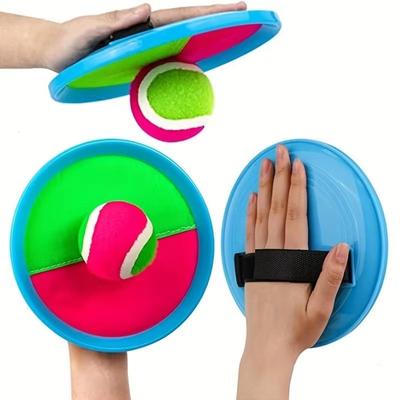
DynamicDeals Family Fun Outdoor Suction Catch Game Parent Child Interactive Toss And Catch Set Family Fun Outdoor Suction Catch Game Parent Child Interactive Toss And Catch SetTurn every sunny afternoon into a bonding adventure with this outdoor family game designed for parents and kids to laugh, play, and connect. This engaging suction cup catch game set brings simple joy back into active play, making it easy for...37,97 $*Shipping: 0,00 $Secure redirect to the provider
-
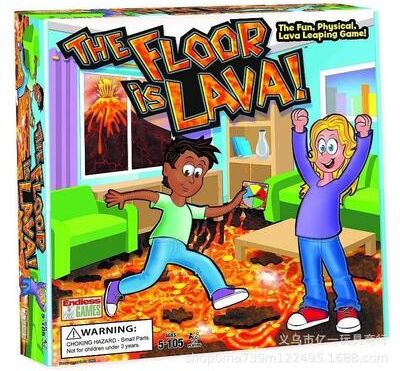
Uplift Picks Kids Wheel Card Game Fun Educational Family Board Card Game Kids Wheel Card Game Fun Educational Family Board Card GameBring excitement and learning together with this wheel card game designed especially for children. This interactive board card game keeps kids engaged through simple rules, colorful cards, and a spinning wheel that adds surprise to every turn. It...94,48 $*Shipping: 0,00 $Secure redirect to the provider
-
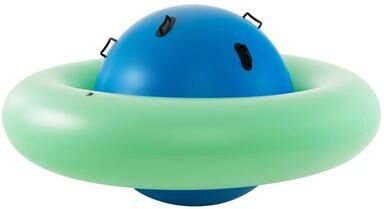
7.5 FT Inflatable Dome Rocker Bouncer with 6 Handles Fun Outdoor GameThis inflatable dome rocker bouncer is superior to a normal hopper ball in its endless possibilities. It encourages children's creativity, and lets them decide the way to play, be it bouncing, rolling, tilting or climbing.139,69 $*Shipping: 0,00 $Secure redirect to the provider

-
What is the difference between ordinal scaled variables and ordinal variables?
Ordinal scaled variables are variables that have a specific order or ranking, but the intervals between the values are not necessarily equal. On the other hand, ordinal variables are variables that have categories with a natural order, but the numerical values assigned to them do not have any meaningful interpretation. In summary, ordinal scaled variables have meaningful numerical values with a specific order, while ordinal variables have categories with a natural order but lack meaningful numerical values. **
-
What are random variables?
Random variables are variables that can take on different values based on the outcome of a random event. They represent the possible outcomes of a random process and are used in probability theory and statistics to quantify uncertainty. Random variables can be discrete, taking on a finite number of values, or continuous, taking on any value within a range. They are essential for modeling and analyzing uncertain situations in various fields such as finance, engineering, and biology. **
-
What are reduced variables?
Reduced variables are a set of transformed variables that are used to simplify the analysis of a system or process. These variables are often obtained by scaling or normalizing the original variables to make them more manageable and easier to interpret. By using reduced variables, complex systems can be analyzed and understood more effectively, leading to better insights and decision-making. **
-
How do I solve an equation with form variables and solution variables?
To solve an equation with form variables and solution variables, you first need to isolate the solution variable on one side of the equation. This involves performing the necessary operations (addition, subtraction, multiplication, division) to move all other variables to the other side of the equation. Once you have isolated the solution variable, you can then solve for it by performing any additional operations needed to simplify the equation. Finally, you can substitute the solution back into the original equation to verify that it satisfies the equation. **

What is a local variable and what is the difference to instance variables, class variables, and normal variables in Java?
A local variable in Java is a variable that is declared within a method, constructor, or block of code and is only accessible within that specific scope. It is temporary and exists only for the duration of the method execution. The main difference between local variables, instance variables, class variables, and normal variables in Java is their scope and lifetime. Instance variables are declared within a class but outside of any method and are accessible to all methods within the class. Class variables are declared with the static keyword and are shared among all instances of a class. Normal variables refer to any variable that is not a local, instance, or class variable. **
How can I pass variables?
To pass variables in programming, you can use parameters in functions or methods. When calling a function, you can pass variables as arguments to the function. Another way to pass variables is by using global variables, but this is generally not recommended as it can lead to code that is harder to maintain and debug. It is best practice to pass variables as parameters to functions or methods to ensure better code organization and reusability. **
Top-Angebote
Products related to Variables:
-
The Handy Homestead Giant Inflatable Dice Party Game Toy For Indoor Outdoor Fun Giant Inflatable Dice Party Game Toy For Indoor Outdoor FunBring instant laughter, movement, and friendly competition to any gathering with 1pc inflatable dice made for big, playful moments. This lightweight blowup cube is a fun giant dice toy for kids, families, classrooms, parties, and outdoor activities....34,97 $*Shipping: 0,00 $Secure redirect to the provider
-
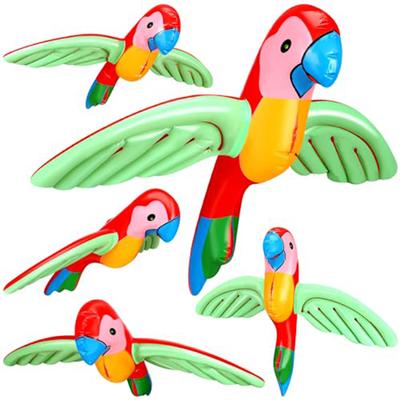
Modern Home Fixes Inflatable Parrot Toss Game Toy For Beach Parties Outdoor Fun Inflatable Parrot Toss Game Toy For Beach Parties Outdoor FunTurn any gathering into a lively experience with this inflatable 1pc parrot game designed to spark laughter and friendly competition. Perfect for families, kids, and party lovers, its a lightweight, portable toy that brings instant fun to any...34,97 $*Shipping: 0,00 $Secure redirect to the provider
-
DynamicDeals ActiveBounce Sensory Ball Outdoor Pull & Toss Game For Kids And Family Fun ActiveBounce Sensory Ball Outdoor Pull & Toss Game For Kids And Family FunTurn everyday playtime into an exciting energyburning adventure with the ActiveBounce outdoor toy. Designed for kids, teens, and even adults, this interactive pullandthrow game helps improve coordination, focus, and active movement while keeping...29,97 $*Shipping: 0,00 $Secure redirect to the provider
-
DynamicDeals Family Fun Outdoor Suction Catch Game Parent Child Interactive Toss And Catch Set Family Fun Outdoor Suction Catch Game Parent Child Interactive Toss And Catch SetTurn every sunny afternoon into a bonding adventure with this outdoor family game designed for parents and kids to laugh, play, and connect. This engaging suction cup catch game set brings simple joy back into active play, making it easy for...37,97 $*Shipping: 0,00 $Secure redirect to the provider
-
What are river variables and potential variables?
River variables are physical, chemical, and biological characteristics of a river that can be measured and monitored to assess its health and quality. These variables include parameters such as water temperature, pH levels, dissolved oxygen, nutrient concentrations, and the presence of pollutants. Potential variables are factors that can influence or impact the river variables, such as land use practices, urban development, agricultural runoff, and climate change. Understanding both river variables and potential variables is essential for effective river management and conservation efforts. **
-
What is the difference between primitive variables and reference variables?
Primitive variables store the actual value, such as numbers or characters, directly in memory. Reference variables, on the other hand, store a reference to an object in memory rather than the actual value. This means that when working with reference variables, you are actually working with the object that the reference points to, while with primitive variables, you are working directly with the value stored in memory. Additionally, primitive variables are allocated on the stack, while reference variables are allocated on the heap. **
-
What is the difference between ordinal scaled variables and ordinal variables?
Ordinal scaled variables are variables that have a specific order or ranking, but the intervals between the values are not necessarily equal. On the other hand, ordinal variables are variables that have categories with a natural order, but the numerical values assigned to them do not have any meaningful interpretation. In summary, ordinal scaled variables have meaningful numerical values with a specific order, while ordinal variables have categories with a natural order but lack meaningful numerical values. **
-
What are random variables?
Random variables are variables that can take on different values based on the outcome of a random event. They represent the possible outcomes of a random process and are used in probability theory and statistics to quantify uncertainty. Random variables can be discrete, taking on a finite number of values, or continuous, taking on any value within a range. They are essential for modeling and analyzing uncertain situations in various fields such as finance, engineering, and biology. **
Similar search terms for Variables
-
Uplift Picks Kids Wheel Card Game Fun Educational Family Board Card Game Kids Wheel Card Game Fun Educational Family Board Card GameBring excitement and learning together with this wheel card game designed especially for children. This interactive board card game keeps kids engaged through simple rules, colorful cards, and a spinning wheel that adds surprise to every turn. It...94,48 $*Shipping: 0,00 $Secure redirect to the provider
-
7.5 FT Inflatable Dome Rocker Bouncer with 6 Handles Fun Outdoor GameThis inflatable dome rocker bouncer is superior to a normal hopper ball in its endless possibilities. It encourages children's creativity, and lets them decide the way to play, be it bouncing, rolling, tilting or climbing.139,69 $*Shipping: 0,00 $Secure redirect to the provider
-
Quick Pick Pro Blowing Pipe Ball Toy Set Balance Training Outdoor Game For Kids Coordination Fun Blowing Pipe Ball Toy Set Balance Training Outdoor Game For Kids Coordination FunBring excitement, focus, and laughter into playtime with this engaging blowing pipe ball toy designed to challenge breath control and precision. Perfect for kids and families, this interactive set turns simple air pressure into a fun and...29,97 $*Shipping: 0,00 $Secure redirect to the provider
-
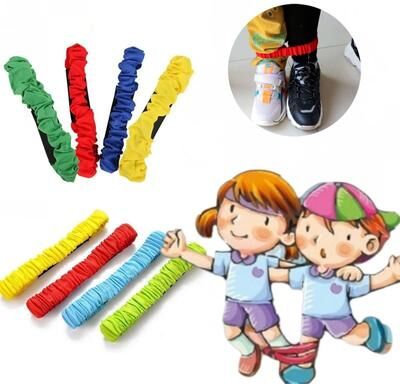
DynamicDeals Ultimate Three Legged Race Game Set Durable Kids Outdoor Toy For Family Team Fun Ultimate Three Legged Race Game Set Durable Kids Outdoor Toy For Family Team FunTurn any gathering into laughter and unforgettable memories with this engaging threelegged race game set designed for both kids and adults. Perfect as a kids outdoor toy and a family team game, it strengthens coordination and sparks joy with every...29,97 $*Shipping: 0,00 $Secure redirect to the provider
-
What are reduced variables?
Reduced variables are a set of transformed variables that are used to simplify the analysis of a system or process. These variables are often obtained by scaling or normalizing the original variables to make them more manageable and easier to interpret. By using reduced variables, complex systems can be analyzed and understood more effectively, leading to better insights and decision-making. **
-
How do I solve an equation with form variables and solution variables?
To solve an equation with form variables and solution variables, you first need to isolate the solution variable on one side of the equation. This involves performing the necessary operations (addition, subtraction, multiplication, division) to move all other variables to the other side of the equation. Once you have isolated the solution variable, you can then solve for it by performing any additional operations needed to simplify the equation. Finally, you can substitute the solution back into the original equation to verify that it satisfies the equation. **
-
What is a local variable and what is the difference to instance variables, class variables, and normal variables in Java?
A local variable in Java is a variable that is declared within a method, constructor, or block of code and is only accessible within that specific scope. It is temporary and exists only for the duration of the method execution. The main difference between local variables, instance variables, class variables, and normal variables in Java is their scope and lifetime. Instance variables are declared within a class but outside of any method and are accessible to all methods within the class. Class variables are declared with the static keyword and are shared among all instances of a class. Normal variables refer to any variable that is not a local, instance, or class variable. **
-
How can I pass variables?
To pass variables in programming, you can use parameters in functions or methods. When calling a function, you can pass variables as arguments to the function. Another way to pass variables is by using global variables, but this is generally not recommended as it can lead to code that is harder to maintain and debug. It is best practice to pass variables as parameters to functions or methods to ensure better code organization and reusability. **
* All prices are inclusive of VAT and, if applicable, plus shipping costs. The offer information is based on the details provided by the respective shop and is updated through automated processes. Real-time updates do not occur, so deviations can occur in individual cases. ** Note: Parts of this content were created by AI.